
The latest focus issue of CASE is now available exploring red murmurs including “Nonbacterial Thrombotic Endocarditis and Mechanical Valve Thrombosis in a Patient with Antiphospholipid Syndrome,” by Bravo Et Al. CASE Editor-in-Chief Vincent Sorrell, MD, FASE, remarked, “For an example of how the sophisticated use of echo and advanced CV imaging can carefully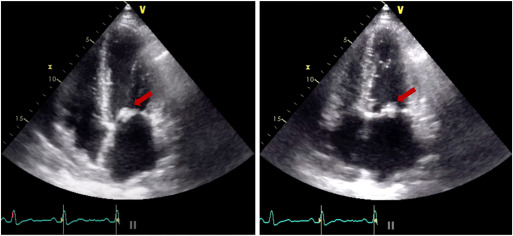 diagnose and guide the management of a patient with complex, multivalvular heart disease, you simply must read XXX from Bravo et al. Their 45yo patient with antiphospholipid syndrome had a series of complications including a stroke and unprovoked pulmonary embolism, non-bacterial thrombotic endocarditis, valve surgery and valve thrombosis. Through their careful, intermittent assessment with 2D and 3D TTE and TEE as well as cardiac CT imaging, they were able to strategize subsequent care including mitral valve replacement. Later in this patient’s clinical course, echo-guided, low-dose thrombolysis helped to safely resolve a stenotic MVR with clot-burden. They include outstanding 3D TEE, CCT, and surgical images for you.”
This focus edition continues to explore the hunt for red murmurs through the sound of echo with a series of compelling cases. Szarvas et al. presents a case of severe mitral stenosis that underscores the importance of precise cardiac imaging techniques for achieving an accurate diagnosis. Shenton et al. demonstrates the effectiveness of valve-in-valve-ring (ViViR) for valve-in-ring (ViR) procedures and emphasizes the pivotal role of transesophageal echocardiography in guiding both interventions. Marthe et al. explores the diagnostic challenges of hemodynamic assessment in patients with concomitant left ventricular outflow tract obstruction and aortic stenosis, particularly in the echocardiographic Doppler evaluation and accurate grading of aortic stenosis severity. Keen et al. highlights the diagnostic value of integrated imaging modalities in detecting obstructive prosthetic valve dysfunction and coronary embolism, enabling timely surgical intervention. Bahar et al. illustrates the late clinical trajectory following unreconstructed valvectomy, tracing the progression from long-standing free tricuspid regurgitation to refractory right-sided heart failure and emphasizing the importance of postoperative surveillance. Jacky Chen et al. explored how, although isolated tricuspid valve surgery is often reserved for advanced right heart failure, earlier intervention may be warranted in patients with a patent foramen ovale to mitigate elevated stroke risk. Finally, Alvarez Plasencia et al. report on a young patient with a history of childhood pulmonary valve stenosis who, nearly two decades later, presented with severe tricuspid regurgitation due to an anterior leaflet cleft, further demonstrating the value of echocardiography in identifying rare but significant structural abnormalities.
Readers can look forward to Dr. Sorrell’s editorial, which not only explores the eight excellent CASEs on the hunt for red murmurs, but also celebrates a milestone in CASE’s history with it’s successful listing in Scopus.
Related News

ASE News
Beyond the Blockage: Coronary Artery Disease with a Twist
February 18, 2026
ASE News
New Issue of CASE is Brrrrr-illiant
January 21, 2026
Gobble Up a New Issue of November CASE
November 18, 2025