
The latest issue of CASE is now available with intriguing reports, including “The Herniated Heart: A Rare Cause of Myocardial Infarction Identified by Multimodality Imaging,” by Rice Et Al. CASE Editor-in-Chief, Vincent Sorrell, MD,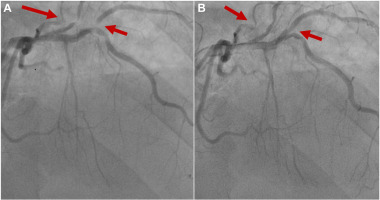 FASE, remarked, “You simply must read this incredible CASE. They took the time to publish their findings on a 42-year-old patient who presented with a STEMI and was subsequently found to have what we all fear but rarely see: myocardial herniation through a partial pericardial defect. Having seen dozens of patients over my career with complete or partial pericardial agenesis, I have always been aware of this possibility but have never seen it. These authors provide readers with pathognomonic CXR, TTE, CCT, CMR, and the most striking invasive coronary angiography images ever (with “dynamic coronary compression during diastole that should alert interventional cardiologists to consider this diagnosis”). They finish this imaging extravaganza with the intraoperative photos prior to pericardiectomy that directly show the implausible strangulated lateral myocardium with linear rim of restricting pericardium. There is something for everyone in this report. CMR readers will especially appreciate seeing the tissue characterization with striking myocardial edema with subepicardial LGE in a ring-shaped (strangulated) pattern. CCT readers will be struck by the coronary images with the “pinched stent”. Clinical cardiologists will enjoy following the initial and subsequent management for this patient. In the end, this is one of the best alternative explanations for a STEMI presentation you will ever read about. Enjoy!”
This issue of CASE highlights a collection of rare and clinically strong findings across cardiovascular imaging. Te-Wei Kuan et al. reports a remarkable case of acute myocardial infarction complicated by both ventricular septal rupture (VSR) and left ventricular pseudoaneurysm (LVP), notable for the patient’s survival without definitive treatment for more than a year following the initial event. The issue also features two intriguing cases involving cardiac tumors and pseudotumors. Yilmaz et al. describes a completely asymptomatic patient with mitral stenosis in which routine transthoracic echocardiographic follow-up revealed a large, freely mobile spherical left atrial thrombus despite therapeutic anticoagulation, underscoring the importance of vigilant echocardiographic surveillance in high-risk populations. Roldan et al. further demonstrates the value of TEE in detecting right heart masses in a patient with metastatic testicular germ cell tumor, a challenging clinical scenario associated with increased morbidity and mortality. Barros et al. reminds readers that congenital heart disease can present at any age through a fascinating familial cluster of anomalous coronary arteries spanning siblings and cousins, including a case of ARCAPA in a patient as young as six years old. Showcasing innovation in echocardiography, Roslan et al. explores the use of the “2+1” simplified echocardiographic diagnostic framework for constrictive pericarditis. Rounding out the issue, Creevey et al. presents a unique veterinary case identifying interatrial septal hematoma formation and subsequent pericardial effusion following transseptal puncture in a dog.
Readers can look forward to Dr. Sorrell’s editorial, “Blow Hard”.
Share your next great case with CASE! Whether you’re preparing your very first submission or adding to a long list of published reports, we are here to make it a great experience. Email us with questions or submit your report today!
Related News

Tricks, Mimics, and Diagnostic Treats: October’s CASE Reports
October 21, 2026
Fall Into September CASE
September 22, 2026
One Last Summer Read: The August CASE
August 19, 2026